
 My First Coloring Book
 My First Halloween Coloring Book
 My First Christmas Coloring Book
 Color and Learn Numbers
 Visual Math for Pre-K & K
Home > Pre-writing skills
Guide · Ages 3-5Pre-writing skills for preschoolers: a simple guide for ages 3 to 5
Before children learn to write letters, they need to master the simple lines and shapes that letters are made of. These are called pre-writing skills, and they are one of the best things you can practice with a preschooler at home.
In this guide you will find what pre-writing skills are, the order in which children usually learn them, and simple, playful ways to practice. You can also download 8 free tracing worksheets to get started today.
What are pre-writing skills?
Pre-writing skills are the basic strokes a child needs before writing: vertical and horizontal lines, circles, crosses, diagonal lines and simple shapes like squares and triangles. Every letter of the alphabet is a combination of these strokes. A child who can draw a vertical line and a circle is already halfway to writing a "b" or a "d".
Practicing them also builds the skills behind good handwriting: pencil control, hand and eye coordination, finger strength and the ability to start and stop a line where you want.
The order children usually learn them
Every child develops at their own pace, but most follow a similar sequence. As a general guide:
- Around 2 to 3 years: vertical lines, then horizontal lines, then circles.
- Around 3 to 4 years: crosses, wavy lines and simple loops.
- Around 4 to 5 years: squares, diagonal lines, zigzags and spirals.
- Around 5 years: triangles and more complex combinations, ready for letters.
Use these ages as a rough map, not a test. If your child is not ready for a stroke yet, go back to the previous one and keep it fun.
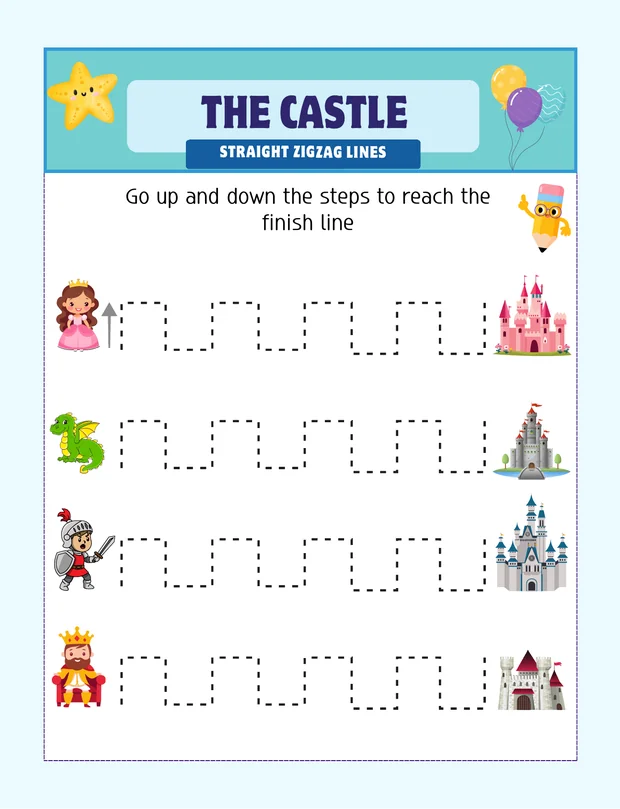
Why practice lines before letters?
When children try to write letters too early, they often grip the pencil too tightly, start strokes in the wrong place or get frustrated. Practicing pre-writing strokes first lets them focus on the movement itself, without the pressure of getting a letter "right". Letters then come more naturally, because the hand already knows the movements.
Simple ways to practice at home
Tracing worksheets
Tracing a dotted path from a picture to a picture gives children a clear goal: bring the bee to the flower, take the rocket to the planet. Short worksheets, one or two a day, are ideal.
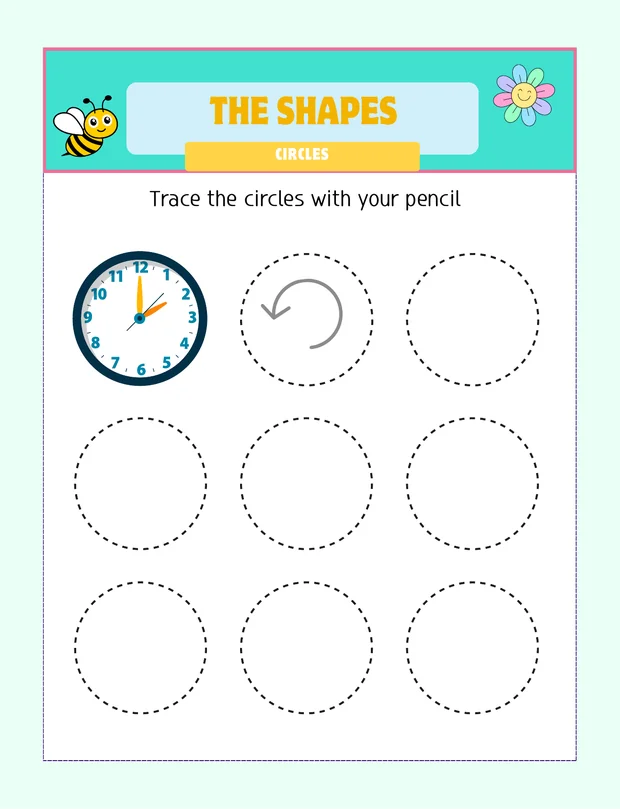
Big movements first
Draw lines and circles in the air, on a chalkboard, with a finger in sand or with chalk on the sidewalk. Big movements of the arm prepare the smaller movements of the hand.
Play with playdough
Rolling snakes and balls with playdough strengthens the small muscles of the hand that children need to hold a pencil.
Loops and spirals for flow
Once lines and circles feel easy, loops and spirals help children move the pencil smoothly without lifting it, which is exactly what they will need for connected writing later.
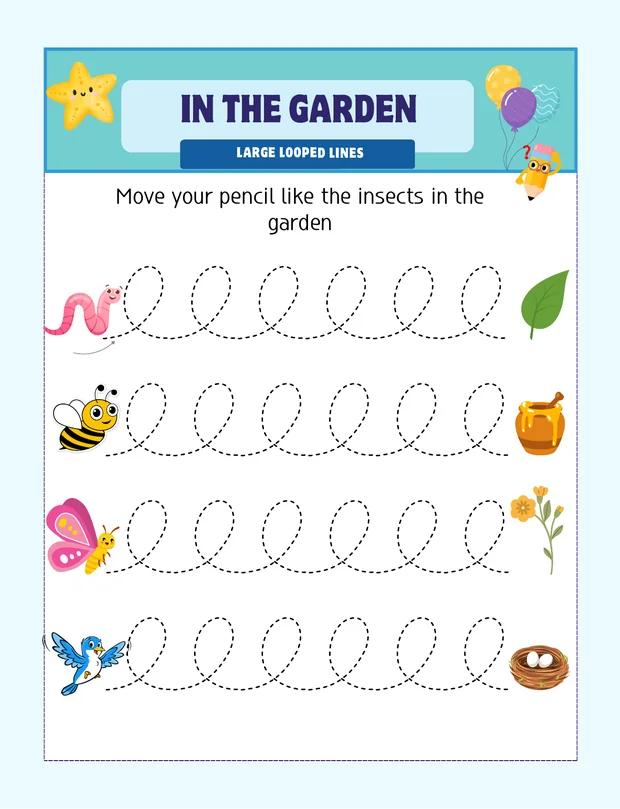
Tips for a good tracing session
- Keep it short: five to ten minutes is plenty.
- Use thick crayons or triangular pencils: they are easier to grip for small hands.
- Show where to start: follow the arrow or the dot at the beginning of each path.
- Praise the effort, not perfection: going outside the line is part of learning.
- Finish with a game: a maze or a coloring page is a great reward at the end.
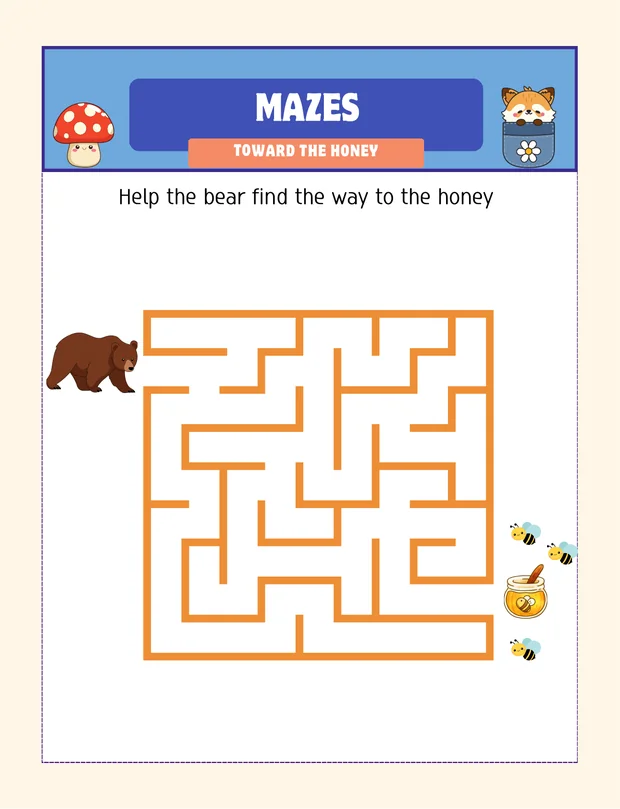
Free tracing worksheets to start today
We created 8 free printable tracing worksheets with raindrops, fish, rockets, shapes, a rainbow and a maze. Download them here and print them at home.
Want a complete program?
Our Preschool Learn & Play Tracing Workbook follows this same progression, from first lines to curves, shapes, mazes and a final review with a diploma, all with colorful pictures that make each page a small game.
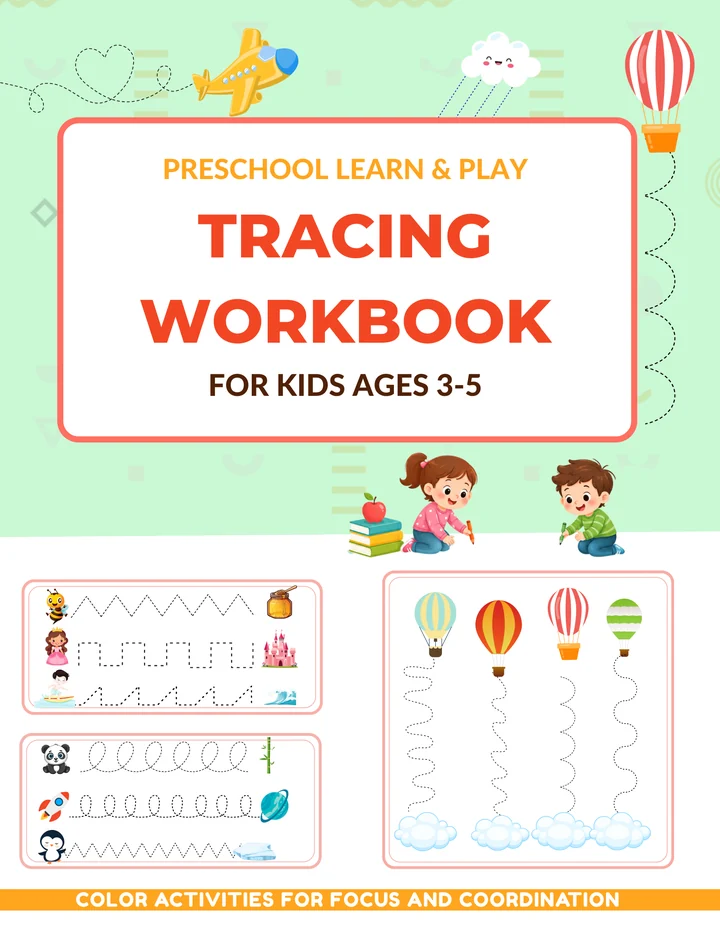
Preschool Learn & Play Tracing Workbook
Colorful tracing activities for ages 3 to 5 that build fine motor skills, focus and pencil control.
View on AmazonReady for numbers next? Read our guide to early math for preschoolers.
Frequently asked questions
At what age should a child start pre-writing practice?
Many children start scribbling and drawing lines between ages 2 and 3. Structured tracing usually works well from around age 3, always as play and in short sessions.
Should my child learn to write letters before pre-writing strokes?
It usually works better the other way around. Lines, circles and crosses are the building blocks of letters, so practicing them first makes letter writing easier later.
How long should we practice each day?
Five to ten minutes is enough for most preschoolers. Stop while your child is still enjoying it.
Is it a problem if my child goes outside the lines?
Not at all. Control improves with practice. Praise the effort and the direction of the stroke, not perfection.