
 My First Coloring Book
 My First Halloween Coloring Book
 My First Christmas Coloring Book
 Preschool Learn & Play Tracing Workbook
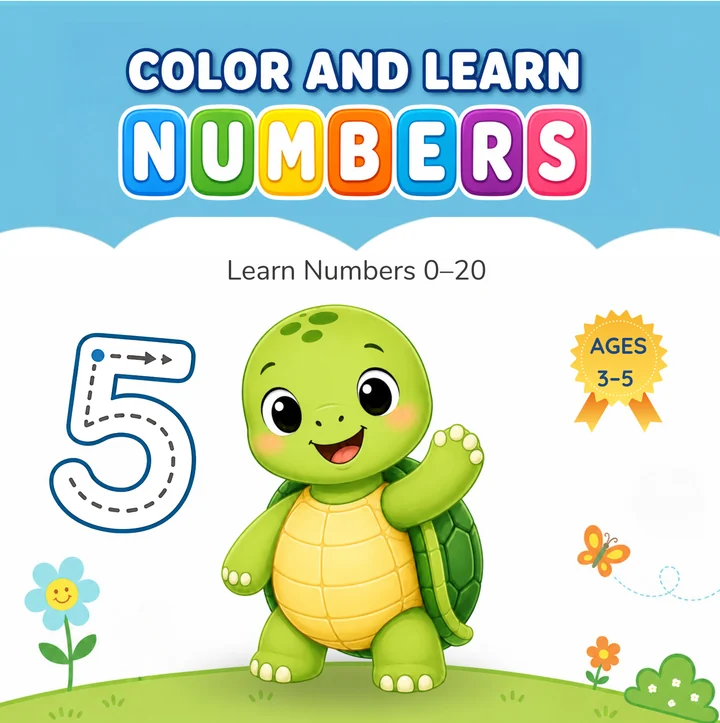 Color and Learn Numbers
Home > Early math
Guide · Ages 4-6Early math for preschoolers: simple activities for ages 4 to 6
Early math is not about memorizing numbers. It is about understanding what numbers mean: how many, more or less, what comes next. The good news is that preschoolers learn it best through pictures, objects and play.
This guide walks through the main early math skills in the order children usually build them, with simple ideas to practice at home and examples from our Visual Math workbook.
1. Recognizing and writing numbers
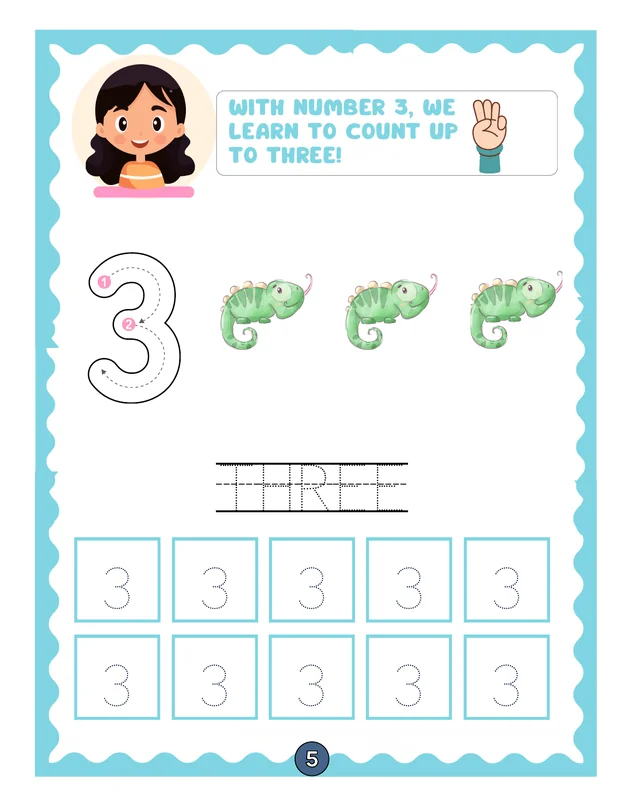
The first step is connecting a number symbol with a quantity. Children learn to recognize the number 3, trace it, and see three real objects next to it. Tracing the number also prepares the hand for writing.
2. Counting objects
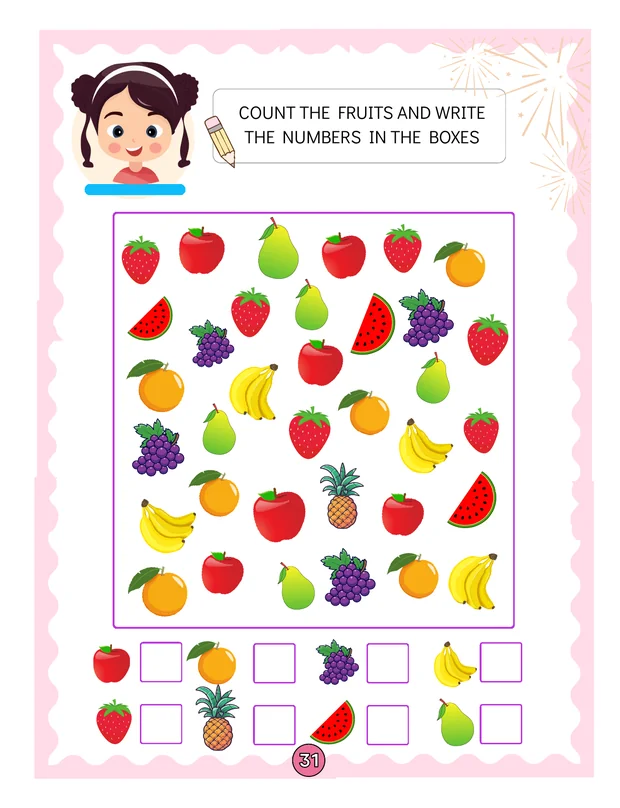
Counting well means touching or pointing to each object once, saying one number per object, and knowing that the last number tells how many there are. This idea is the base of all early math.
Try at home: count stairs as you climb them, snacks on a plate or toys as you put them away.
3. Number sense: matching and comparing
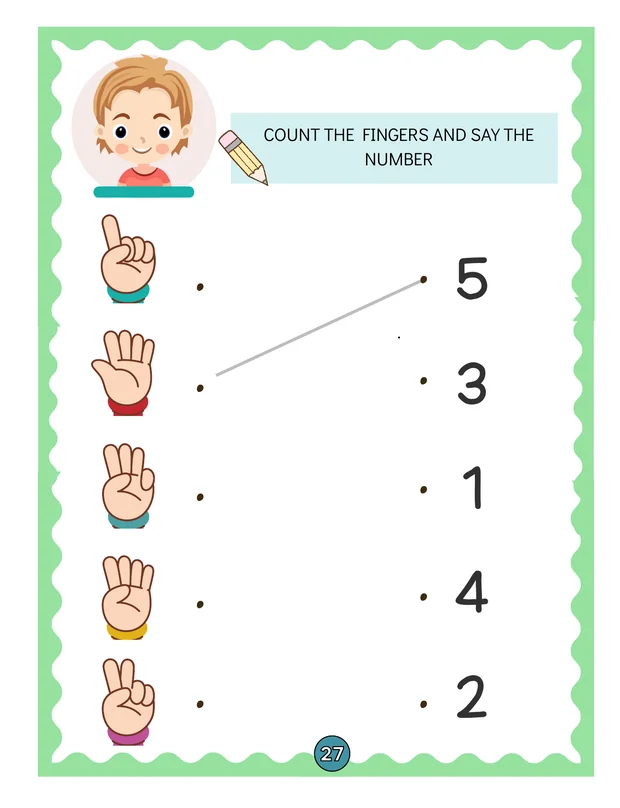
Number sense is the feeling for quantities: recognizing a small group without counting, matching groups with the same number, and telling which group has more or less. Fingers are a wonderful tool, because children always have them at hand.
4. Shapes and patterns
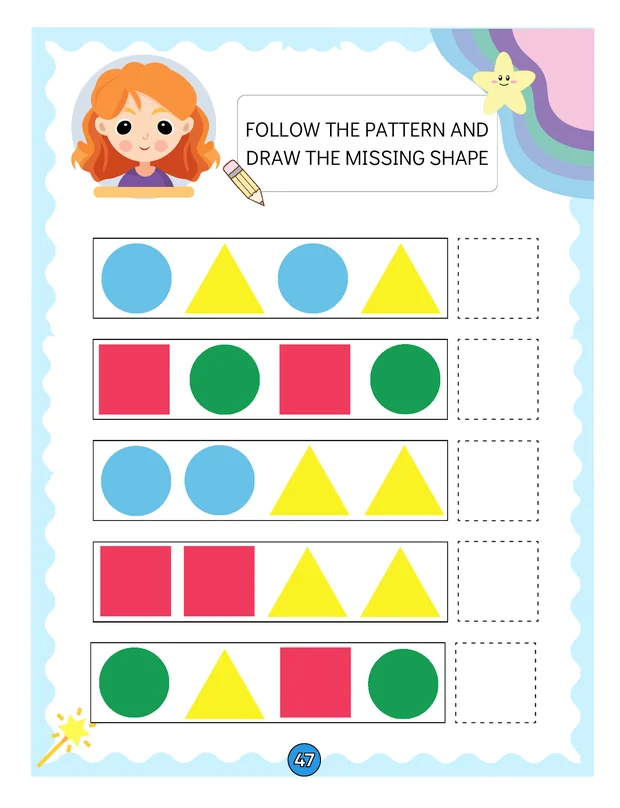
Recognizing shapes and continuing patterns builds visual and logical thinking. A pattern like circle, square, triangle, circle, square… teaches children to notice rules and predict what comes next, a skill they will use all through school.
5. First addition and subtraction with pictures
When counting feels easy, children can start combining and taking away. Pictures make it concrete: two teddy bears plus one teddy bear makes three. For subtraction, crossing out pictures shows clearly what is left.
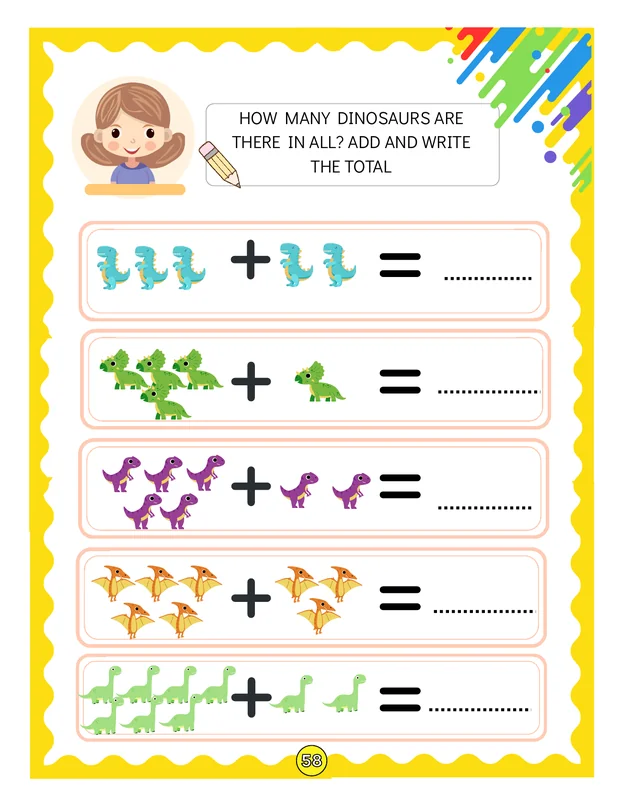
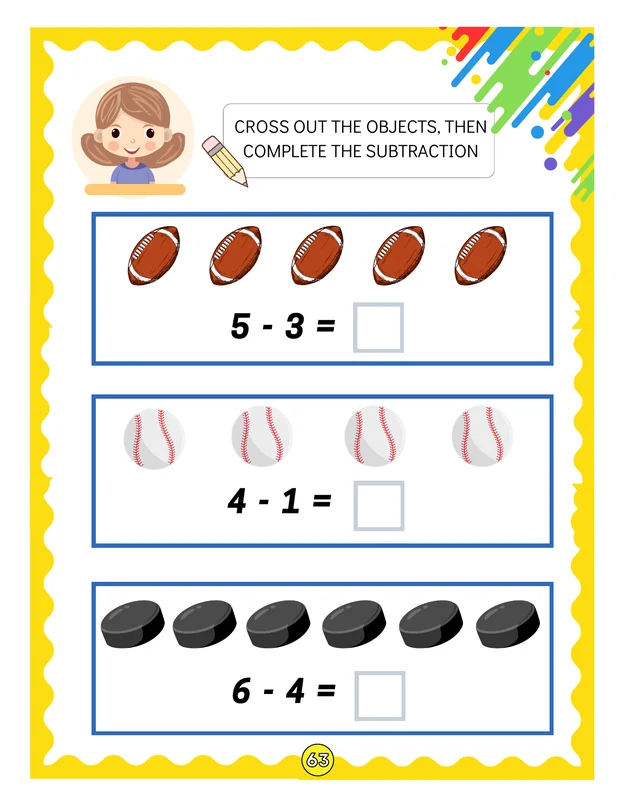
Tips for practicing math at home
- Use real objects first, then pictures, then numbers on paper.
- Keep sessions short and stop while your child is still having fun.
- Talk about math in daily life: "How many forks do we need?", "Which cup has more juice?"
- Celebrate effort. Mistakes are part of learning, especially with numbers.
A complete visual math workbook
Our Visual Math for Pre-K & K follows this same path in six units: numbers 1 to 10, counting and number sense, counting with pictures, shapes and patterns, addition and subtraction with pictures, and a final review, all in full color.
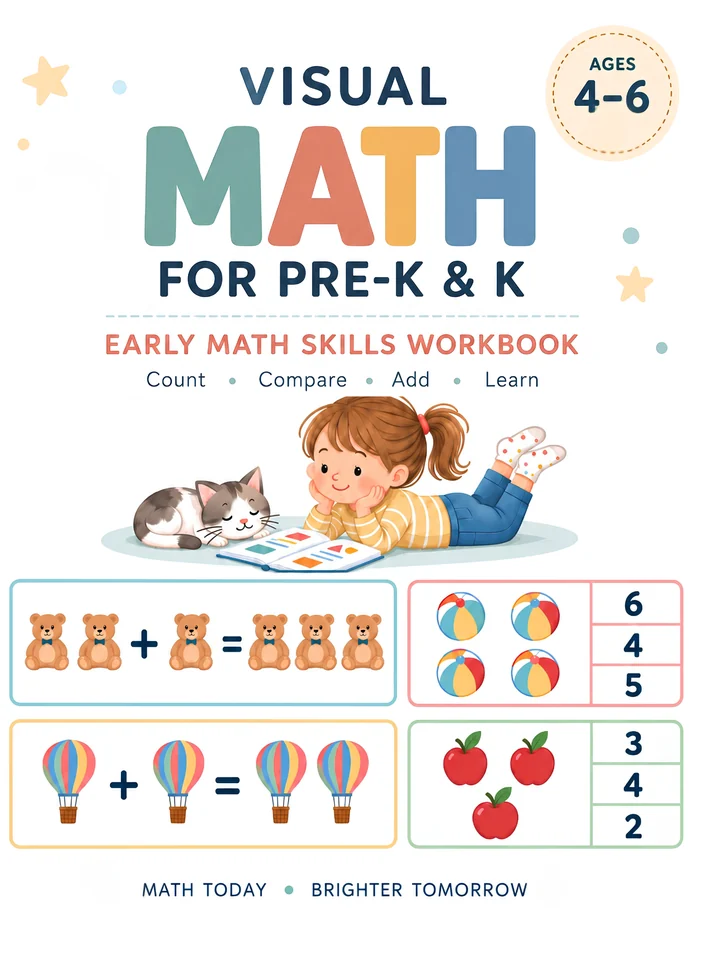
Visual Math for Pre-K & K
A full-color early math workbook for ages 4 to 6: count, compare, add and learn with pictures.
View on AmazonLooking for something for younger children? See all our learning workbooks, including Color and Learn Numbers for ages 3 to 5.
Frequently asked questions
When should children start learning math?
Children start building math ideas very early, simply by counting toys or comparing sizes. Structured activities like the ones in this guide work well from around age 4.
Should my child learn to add before counting well?
No. Counting objects one by one, and knowing that the last number tells "how many", is the base for addition. Strong counting first makes adding much easier.
Are worksheets enough?
Worksheets are great for practice, but they work best together with real objects: blocks, snacks, buttons or toys your child can touch and move.
How long should a math session last?
Ten minutes is plenty at this age. Short, playful sessions every day work better than long ones once a week.